Cloud & DevOpsAnalysis
Nscale lost a US$3.22bn Microsoft contract when its grid connection was withdrawn
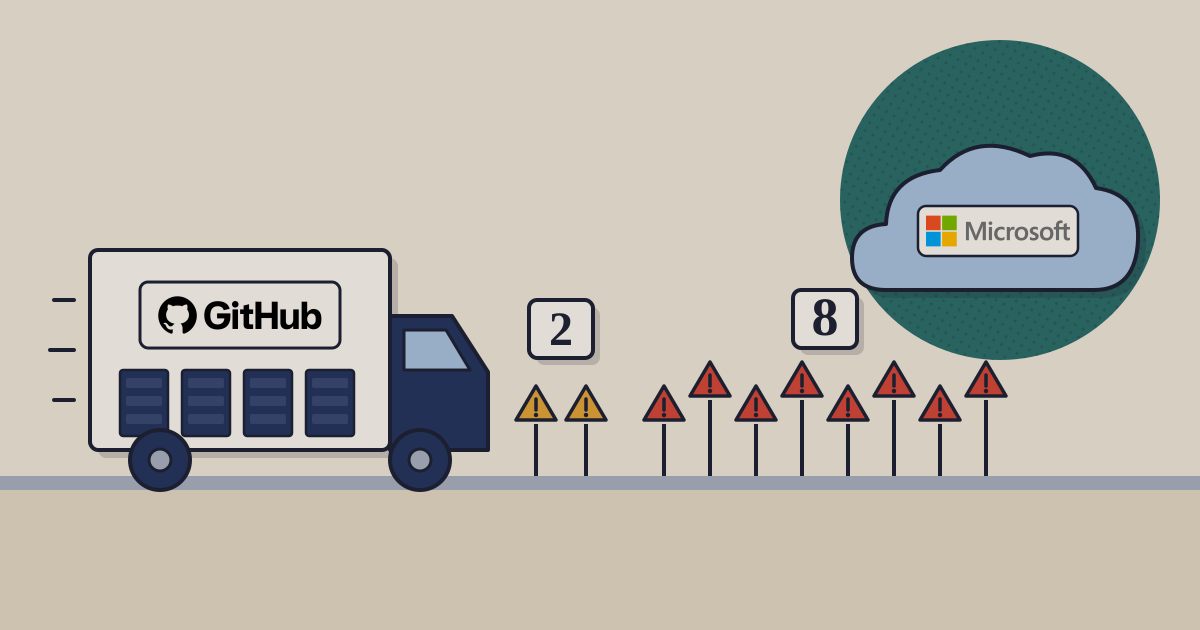
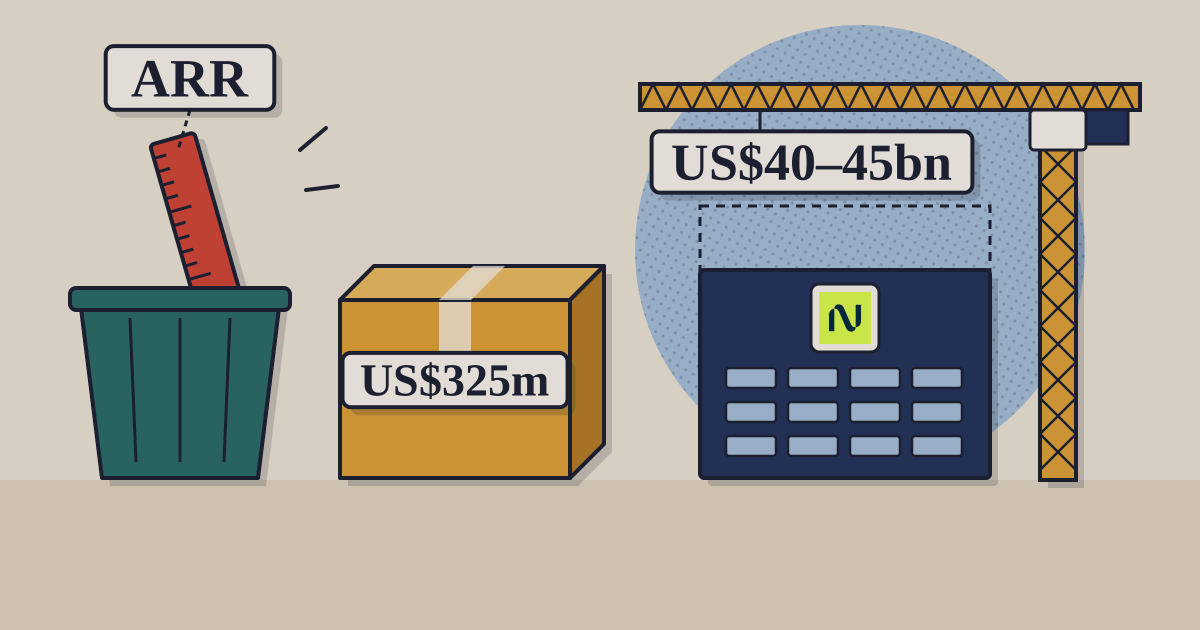
Nscale’s amended IPO filing of 12 November: a US$105.8bn contract book led by Anthropic and Microsoft, US$307.5m of nine-month revenue, a US$1.69bn loss and US$5.5bn of debt.

Nscale, a London-based company spun out of Arkon Energy in May 2024, rents out Nvidia GPU capacity in data centres it owns, leases or shares, with sites in Norway, Portugal, Iceland, the US and the UK. It has applied to list on the New York Stock Exchange as NSCL, and its filings carry no price range yet.1 Until the end of 2024 most of its revenue came from hosting cryptocurrency miners; now its customers include Microsoft and Anthropic. This piece reads both filings to answer three questions: what happened at Loughton, why a power connection can end a GPU contract, and what it means for a company this young to have most of a US$105.8bn book with two customers.1
01A US$3.22bn contract ended at the grid connection
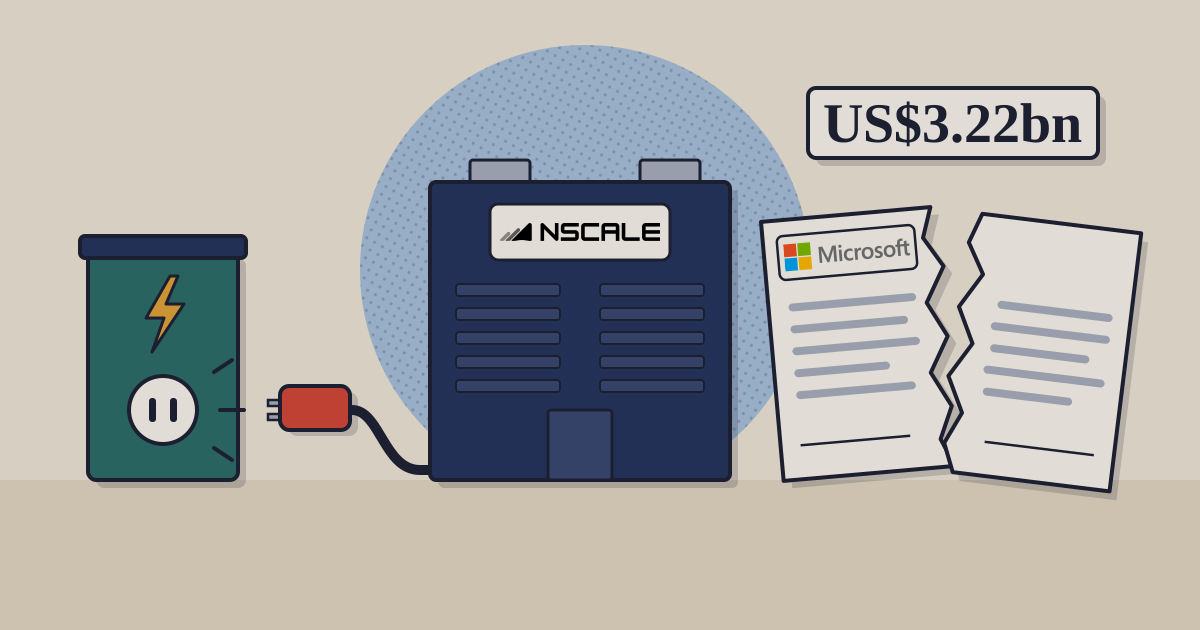
Between September 2025 and April 2026, Nscale signed statements of work with Microsoft that provide for payments “of up to approximately $43.8 billion through December 2033”. The September filing stated that figure and nothing more. The November amendment keeps the sentence and adds what happened next:12
Subsequently, a single statement of work valued at $3.22 billion was terminated without any impact to any other statements of work. This resulted from a site-specific development at our data center site in Loughton, UK, whereby the local power provider withdrew the connection date and the associated power allocation that was scheduled to be delivered to the site.
US$3.22bn
the Microsoft statement of work terminated after the Loughton connection date was withdrawn
More than ten times Nscale’s US$307.5m of revenue for January to September 2026.
Nscale says it remains committed to Loughton and the UK, is “exploring alternative power sources for the site”, and that “this London-wide grid issue has no impact on our other contracts”. The amendment also adds a line that the September filing lacked: Nscale has “experienced delays at a limited number of sites including our greenfield site in the UK”, none of which, it says, had a material impact.1
The cancellation became public a month after Nscale's first filing and entered its prospectus in November
Events in Nscale's filings and reports, September 2025 to November 2026
Show tableHide table
| Date | Event | Detail |
|---|---|---|
| 16 Sept 2025 | Stargate UK announced | With NVIDIA, Microsoft and OpenAI; Microsoft statements of work signed from this month |
| 24 Apr 2026 | Portugal site bought for Microsoft | Microsoft statements of work, signed by April, total up to US$43.8bn; OpenAI leaves Stargate UK the same month |
| 25 Aug 2026 | Anthropic signs up to US$44.6bn | Four agreements at the Monarch campus, West Virginia |
| 18 Sept 2026 | S-1 filed: book US$103.4bn | As of 31 August; Microsoft still at US$43.8bn, no mention of Loughton |
| 29 Sept 2026 | Anthropic takes its Building 2 option | 60 days to agree terms, subject to extension |
| 18 Oct 2026 | Withdrawal reported | The Telegraph reports Microsoft has pulled out of Loughton |
| 12 Nov 2026 | S-1/A: US$3.22bn terminated | Book US$105.8bn; nine-month results added |
Source: Nscale S-1 (18 Sep 2026) and S-1/A (12 Nov 2026); DatacenterDynamics (19 Oct 2026) · as of 14 November 2026
The press filled in the site. The Telegraph reported Microsoft’s withdrawal on 18 October; DatacenterDynamics reported that the project had aimed for completion in late 2026, as agreed between Nscale and UK Power Networks, the local distribution network operator, and that a grid connection was now not expected until the 2030s. National Grid told the publication it had not agreed to the 2026 date. When Nscale announced Loughton in January 2025, it described about US$3bn of investment, 50 MW of AI capacity and a power allocation of up to 90 MW. Microsoft UK’s chief executive, Darren Hardman, said its US$30bn UK investment plan “will not change”.3
02Why a power connection decides whether a GPU contract exists
A GPU contract of this kind sells capacity that does not exist yet. Nscale’s filing is plain about the order of events: “Contract terms commence upon successful delivery of GPU compute clusters”, and each Microsoft service term runs five to six years “from acceptance of each tranche”. Before a tranche can be accepted, a building has to be energised: tens of megawatts at a fixed date, which on a grid-connected site only the network operator can supply.1
A contract signed today earns nothing until power, GPUs and acceptance arrive in that order
How Nscale's take-or-pay contracts become revenue, as its S-1/A describes them, November 2026
- 01
Sign
A take-or-pay statement of work. Its value counts as “contracted” in the US$105.8bn book.
- 02
Power the site
A connection date and a power allocation from the grid, or on-site generation. Loughton stopped here.
- 03
Deliver and accept
GPUs installed, tested and accepted, tranche by tranche, by the agreed dates.
- 04
Earn
The term starts, five to six years for Microsoft’s tranches, and the value moves to “active”.
Source: Nscale S-1/A, Prospectus Summary, Business and Risk Factors (12 Nov 2026) · as of 14 November 2026
Nscale’s own summary calls access to “reliable, large-scale contiguous power” the “primary gating factor” for AI infrastructure, and its risk factors spell out the Loughton case in advance: “At sites where we require a connection to the utility grid, we may encounter delays in securing such connection or may be unable to secure the capacity required.”1 The same queue is forming elsewhere: on 9 November Norway’s grid operator paused new data-centre grid reservations, and Nscale has Norwegian sites at Glomfjord and Kvandal.
Nscale’s answer is to build its own power. Its Monarch campus in Mason County, West Virginia, bought in March 2026, is planned around “behind-the-meter” generation that operates “independently from the utility grid”, with 2 GW of gross capacity expected by the first half of 2028 and a runway to over 8 GW.1 That is where the Anthropic contract will run, on terms stricter than Microsoft’s: a late tranche is excused only for industry-wide supply constraints on the GPU systems, and if a tranche is not delivered within a set period after its expected date, Anthropic “is entitled to terminate that tranche without liability”. It may also terminate if monthly uptime stays below agreed thresholds.1
03US$105.8bn of contracts, about 80% with two customers
Nscale measures its business by total contract value (TCV): US$105.8bn of “active and contracted” value at the date of the amendment, against US$103.4bn on 31 August and US$38.0bn at the end of 2025. The book grew by US$2.4bn between the two filings even after the US$3.22bn came out. Of it, US$6.4bn was active, up from US$2.6bn on 31 August; the weighted average contract life is about 5.7 years, and customer prepayments average about 20% of TCV.12
Anthropic and Microsoft hold about 80% of Nscale's US$105.8bn contract book
Contracted value by customer, US$bn, as of 12 November 2026
Source: Nscale S-1/A (12 Nov 2026) · as of 12 November 2026 · Microsoft is US$43.8bn less the US$3.22bn terminated; all other contracts is the remainder (our arithmetic)
Microsoft’s capacity sits mostly outside the UK: over 12,600 Nvidia Grace Blackwell GPUs in the first building at Sines, Portugal; over 66,000 Vera Rubin GPUs at a second Sines site from late 2027; and the extra capacity at Stargate Norway that Microsoft took after OpenAI withdrew in April 2026. Anthropic’s four agreements cover four tranches of Vera Rubin NVL72 systems at Monarch, and on 29 September it exercised a right to contract for a second building; if both sides sign, it has a further option on a third. Figure AI, a humanoid-robot maker, signed for about US$3.5bn, half of it payable in Figure’s own shares.1
Concentration is not new for Nscale; only the names have changed. One customer, renting data-centre space in Norway, paid 93% of its 2024 revenue. In 2025 its largest customer paid 73%, and in January–June 2026, 52%. Nscale expects that 2025 customer, unnamed in the filing, to be under 20% of 2026 revenue.1
04Revenue rose 14-fold; debt rose 70-fold
Revenue for January–September was US$307.5m against US$21.3m a year earlier; about US$166.9m of it came in July–September alone, more than the whole first half’s US$140.6m. The operating loss was US$837.5m and the net loss US$1.69bn, 5.5 times revenue.1 The largest single item behind the gap is not cash: US$629.9m of losses on fair-value adjustments, which the filing attributes, for the first half, mainly to warrants issued to Sandton and NVIDIA, which grow as the company’s value rises. Depreciation was US$339.8m, net interest US$242.2m and share-based pay US$174.0m. On Nscale’s adjusted EBITDA measure, the loss was US$289.5m.1
Nscale's debt went from US$78.9m to US$5.5bn in nine months, 18 times its revenue
Revenue and losses for January to September 2026; cash and total debt at period end, US$m
Source: Nscale S-1/A, preliminary results and balance-sheet table (12 Nov 2026) · as of 12 November 2026
The borrowing follows the contracts. Nscale funds each build with project-level loans secured on the contract’s cash flows, and says it has raised more than US$13.4bn: US$6.7bn of equity, more than US$5.7bn of project financing and a US$900m revolving credit line. Cash stood at US$3.58bn on 30 September, up from US$1.50bn.1 The Anthropic contract needs more. Nscale has placed GPU and equipment orders for it, some of which “cannot be contractually deferred, reduced or cancelled”, and says it “will be required to obtain additional financing to meet our forecast obligations in 2027”. As of the amendment it had no binding commitments for any of the financings that contract requires.1
05What has to happen next
Most of Nscale’s book is still a promise of capacity. By its own count, a small share of every measure was running when it filed:
About 6% of Nscale's contract book was active when it filed
Active against active-and-contracted measures, as of 12 November 2026
US$6.4bn
active, of US$105.8bn contracted value
50,000
active GPUs, of 461,000 active or contracted
7 of 17
data-centre sites active
5.7 yrs
weighted average contract life
Source: Nscale S-1/A (12 Nov 2026) · as of 12 November 2026
The September filing, as of 31 August, counted 25,000 active GPUs and five active sites, so delivery doubled in about ten weeks.2 The 461,000 total and the 1.37 GW of active and contracted capacity did not change between the filings, though one Microsoft contract left the book.12
Sources
- Nscale plc: Amendment No. 1 to Form S-1 registration statement (S-1/A) — 12 November 2026
- Nscale Ltd (now Nscale plc): Form S-1 registration statement — 18 September 2026
- DatacenterDynamics: Microsoft pulls out of delayed Nscale data center in Loughton, Essex — 19 October 2026 Trade press; cites The Telegraph of 18 October 2026.
- India Briefing: Digital services in India: OIDAR, GST applicability and compliance — updated 29 September 2023
Disclosure. TechBag is a software reseller: it earns when companies buy through it, including from vendors named here. The analysis is TechBag’s own; no vendor paid for or saw this piece before publication. Facts are labelled reported, TechBag count or our view.
Keep reading