Shiprocket swings to a ₹60 lakh profit as revenue grows 35% and its debt is repaid
Shiprocket’s results for July to September: how the shipping platform earns, what turned a ₹20.3 crore loss into a profit, and where its growth now comes from.

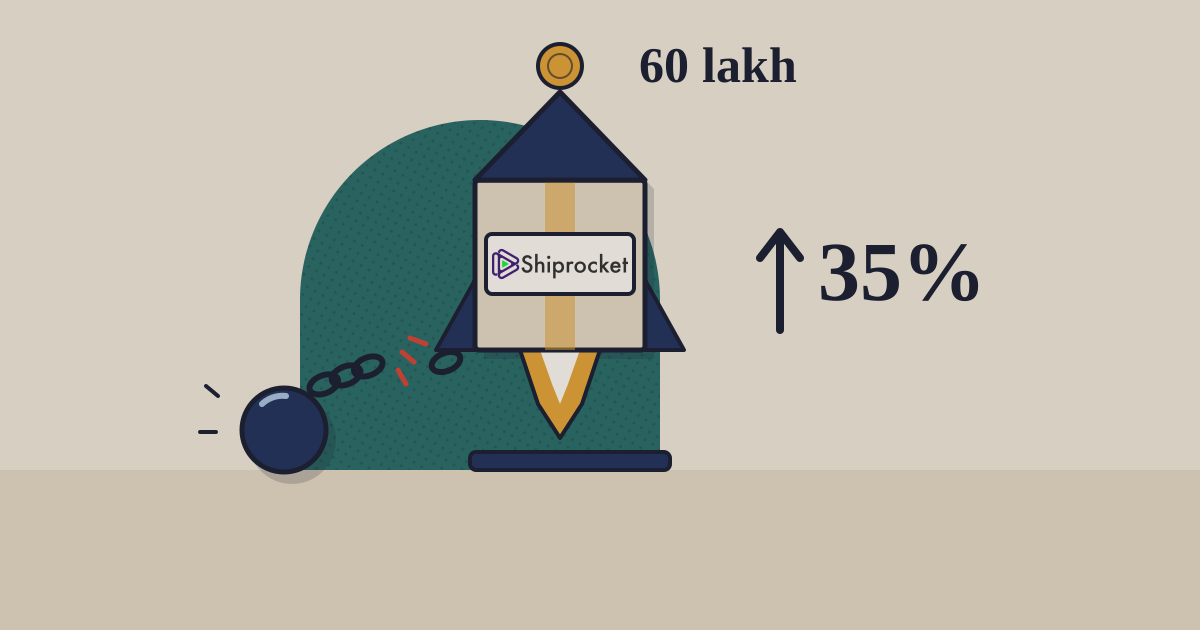
Shiprocket made a profit of ₹59.5 lakh in the three months to September, against a loss of ₹20.3 crore a year earlier and ₹13.7 crore in April–June. Revenue from operations rose 35% to ₹673.6 crore.1 “Turns PAT positive”, its press release said.2 The Gurugram company listed on the NSE and BSE on 19 August, after an IPO priced in a band of ₹92–97 a share that raised ₹885.5 crore of new money and was bid for about 99 times over.15 Part of that money cleared its debt: borrowings of ₹242.0 crore on 31 March were nil on 30 September.1
01How Shiprocket earns
Shiprocket owns no trucks. It connects small online sellers, brands selling from their own websites and social media rather than marketplaces, to more than 42 courier companies and about 250 other partners, and picks a courier for each parcel. “We charge the merchants on consumption. As and when they send a shipment, or as and when they make a checkout, they pay us,” the chief executive, Saahil Goel, said on its first results call in September.4 Much of that money passes through: its largest expense, the cost of merchant solutions, was 73.5% of revenue in the quarter, by our arithmetic. Even IPO money paid courier bills: ₹60.6 crore set aside for general corporate purposes went to Blue Dart (₹40.8 crore) and Delhivery (₹19.8 crore), the monitoring agency’s report shows.1
It reports two businesses. Core, mainly domestic shipping, earned ₹461.5 crore, up 25%, at an adjusted EBITDA margin of 12.8% (operating profit before stock-option costs, depreciation, interest and other income). Emerging, which is checkout and marketing software, cross-border shipping and fulfilment for brands, earned ₹212.2 crore, up 61%, and lost ₹44.9 crore on the same measure.13
02What turned the loss into a profit
About half of Shiprocket's ₹20.9 crore turnaround came from operations, a third from interest earned and saved
Change in profit after tax, July–September 2026 against July–September 2025, by source, ₹ crore
Source: Shiprocket, unaudited consolidated results (segment reconciliation), filed with NSE and BSE · as of 5 November 2026 · TechBag arithmetic on the filing. Not shown: higher depreciation (−₹3.7 crore) and the lease-rent adjustment (+₹2.3 crore), net −₹1.4 crore. The year-earlier quarter was not reviewed by the auditors.
The chief financial officer, Tanmay Kumar, named three drivers: scale in Core, growth in Emerging, and “a stronger balance sheet: IPO proceeds retired all our borrowings, which cut finance costs, and the surplus now earns interest income.”2 Finance costs fell to ₹4.9 crore from ₹6.7 crore. Of ₹825.0 crore of net IPO proceeds, ₹210 crore repaid overdrafts at HDFC Bank (₹133.5 crore) and ICICI Bank (₹76.5 crore); ₹554.4 crore was unspent on 30 September, ₹550 crore of it in bank deposits paying 6.10–6.75% a year.1
03Where the growth comes from
Two lines grew fastest. Marketing software, now sold as Fastrr (ads, checkout and Engage), grew 102%, yet fewer than 10% of Shiprocket’s merchants use one of its products: about 20,000 use checkout and fewer than 250 the ads product, counted over the past twelve months. Omnichannel grew 79% as brands used Shiprocket to restock quick-commerce dark stores, the small warehouses that deliver in minutes: trucks arrive in booked slots at the warehouses of platforms such as Blinkit and Zepto, with the platforms’ purchase orders visible in real time.23 Cross-border shipping grew 9%. Emerging is now 31% of revenue, from 26%, and 9.3% of Core merchants use one of its products, from 7.9%.3
The rest of the IPO money is allotted: ₹205.8 crore to marketing and ₹159.8 crore to technology, mainly for Emerging, over the three years to March 2029, and ₹249.4 crore to acquisitions and general purposes. The filing also discloses that on 16 September an outsider emailed the company claiming access to its systems and company information; Shiprocket reported it to CERT-In and the police, found no payment card or bank account information, and says its assessments so far show no impact on its core or financial systems.1
Sources
- Shiprocket, outcome of board meeting: unaudited consolidated results for the quarter to 30 September 2026, with CARE Ratings' monitoring agency report on the IPO proceeds — 5 November 2026
- Shiprocket, press release on Q2 FY27 results (revised) — 5 November 2026
- Shiprocket, earnings presentation Q2 FY2027 — 5 November 2026
- Shiprocket, transcript of the Q1 FY27 earnings call (call of 8 September) — 11 September 2026
- NSE, Shiprocket Limited issue information: issue period, price band and bids by category — 14 August 2026
Disclosure. TechBag is a software reseller: it earns a margin when a reader buys through it, including from vendors named here. The analysis is TechBag’s own; no vendor paid for or saw this piece before publication. Facts are labelled reported, TechBag count or our view.
Keep reading